
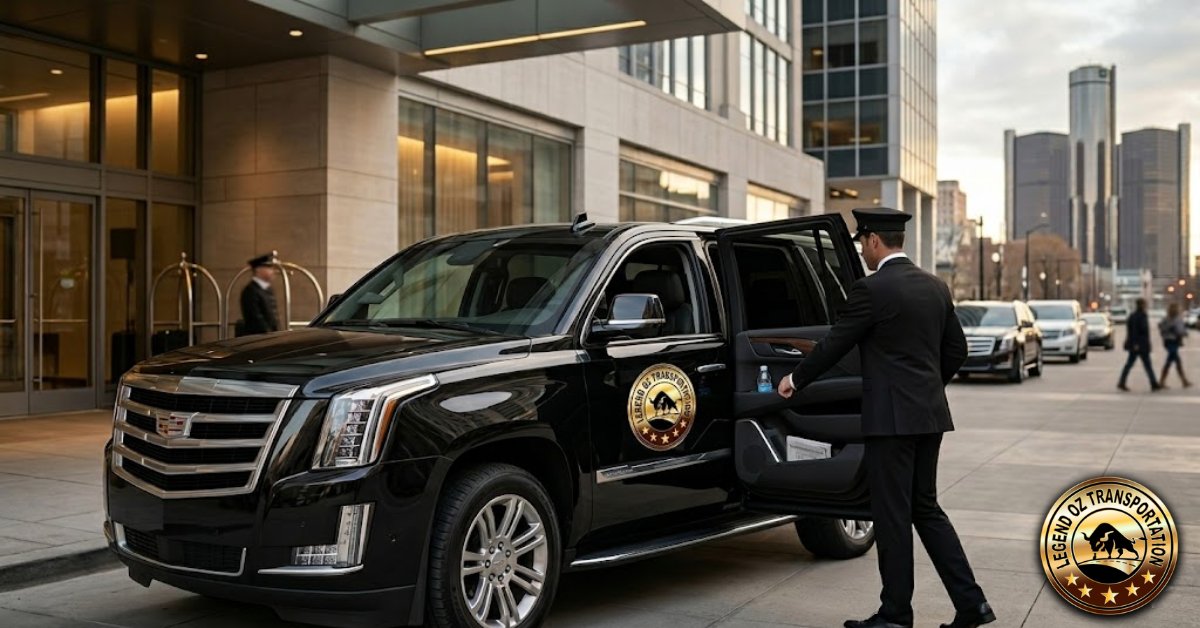
Comfort in travel is not about indulgence, it is about psychology. Predictable, comfortable transportation lowers stress, restores a sense of control, and frees up mental energy. That is why travelers who use chauffeured luxury rides consistently arrive at flights, meetings, and events calmer, sharper, and in a better frame of mind.
Key Takeaways
- Travel stress is real and measurable: roughly one-third of North American business travelers report anxiety and stress while traveling for work
- The biggest psychological driver of travel stress is loss of control, not the trip itself
- Physical comfort directly affects mental performance, which is why executives treat the ride as preparation time
- Small, predictable details like a confirmed pickup, a clean cabin, and a calm driver reduce anxiety more than people expect
- The way a trip begins and ends shapes how you remember the entire journey, a pattern psychologists call the peak-end rule
Think about the last time you drove yourself to the airport. Checking the clock at every red light. Circling the parking deck. Dragging luggage across a shuttle lot while mentally rehearsing whether you locked the front door. By the time you reached security, you were already tired, and your flight had not even boarded.
Now compare that to sitting in the back of a quiet, climate-controlled SUV while someone else handles the road. Same trip, same airport, completely different mental state. That difference is not a coincidence. It is psychology, and it explains why luxury travel keeps growing even among people who consider themselves practical spenders.
Why Does Travel Stress Us Out in the First Place?
Travel is one of the few everyday experiences that combines almost every known stress trigger at once:
- Loss of control: You cannot control traffic on I-94, flight delays, or how long the security line at Detroit Metro Airport will be
- Time pressure: Every leg of a trip has a deadline, and missing one cascades into the next
- Decision fatigue: Route choices, parking decisions, rebooking options, and gate changes pile up until even small choices feel heavy
- Unfamiliar environments: New cities, new roads, and new schedules force the brain to stay on constant alert
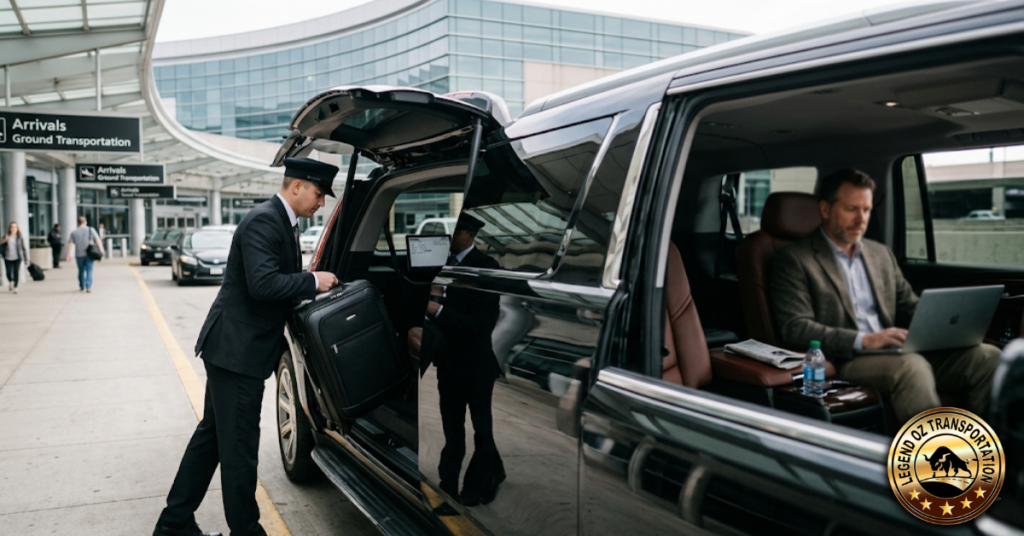
The data backs this up. Research commissioned by World Travel Protection found that about one-third of North American business travelers report feelings of anxiety and stress while traveling for work, with exhaustion close behind. A separate TravelPerk survey found that travelers lose nearly five hours of productivity during a disrupted trip, and around two-thirds say disruptions add real stress to their lives.
In short, the trip itself is rarely the problem. The uncertainty around it is.
The Psychology of Luxury Travel: The Science Behind Comfort
Predictability Calms the Nervous System
The human brain treats uncertainty as a threat. When you do not know whether you will make your flight, your body responds with elevated cortisol, the primary stress hormone. Sustained cortisol makes you irritable, scattered, and physically tense.
Predictability does the opposite. A confirmed pickup time, a driver tracking your flight, and a guaranteed vehicle waiting at arrivals remove the unknowns. There is nothing left to monitor, so the nervous system stands down.
Comfort Frees Up Mental Bandwidth
Psychologists describe attention as a limited resource. Every discomfort you manage, a cramped seat, road noise, temperature swings, navigation, consumes a slice of it. This is cognitive load in action: the more your brain juggles, the less capacity remains for actual thinking.
A comfortable, quiet cabin removes those background demands. That is why ideas often surface during a smooth ride. Your brain finally has room to work.
Physical Ease Shapes Emotional State
The body and mind are not separate systems. Soft seating, controlled temperature, and low noise levels signal safety to the brain, and the brain responds by relaxing. It is the same reason people think better in a calm office than a noisy terminal.
The Psychology of “Arriving Ready”
There is a reason executives across Metro Detroit book chauffeured rides before big meetings, and it is not the leather seats.
The ride functions as a transition zone. Psychologically, humans need buffer time between roles: leaving home mode and entering work mode, or leaving work mode and entering vacation mode. Driving yourself fills that buffer with stress. Being driven fills it with whatever you choose:
- Preparation: Reviewing notes or slides over in-car Wi-Fi before a pitch
- Decompression: Twenty quiet minutes before a red-eye out of DTW
- Recovery: Silence after a long flight home instead of a fight with airport parking
People who arrive composed perform better, negotiate better, and enjoy events more. The vehicle is not just moving your body. It is setting up your mind.
Why Control Is the Real Luxury
Ask frequent travelers what they value most about chauffeured service and the answer is rarely “the Escalade.” It is the feeling that everything is handled.
A professional chauffeur service removes an entire category of decisions:
- No route planning or navigation stress
- No parking hunt or shuttle lot walk
- No surge pricing surprises on a snowy Michigan morning
- No wondering whether a rideshare driver will cancel at 4:30 am
Punctuality plays a special psychological role here. When a service shows up on time, every time, the brain files it under “trustworthy,” and trust is the foundation of relaxation. You cannot unwind in a ride you are worried about.
This is also why loss of control feels worse in winter. Anyone who has white-knuckled M-59 in a February snowstorm knows the difference between driving through it and being driven through it by someone who does it daily.
Small Comforts, Big Impact: The Details That Change a Ride
Behavioral scientists have documented something called the peak-end rule: people judge an experience mostly by its most intense moment and its ending, not its average. For travel, the ride to and from the destination is often that beginning and that ending.
That is why small details carry outsized psychological weight:
- A clean, detailed interior signals care before a word is spoken
- Bottled water and climate control meet basic comfort needs so the brain stops scanning for problems
- A courteous greeting and door service start the trip with a moment of being looked after
- A calm, professional driver sets the emotional tone for everyone in the vehicle
None of these things is expensive on its own. Together, they change how a person remembers an entire trip. A vacation that begins with a smooth pickup feels better in memory than one that began with a parking scramble, even if everything after was identical.

How This Applies to Real Travel Moments in Metro Detroit
The psychology shows up differently depending on the occasion:
- DTW airport transfers: Pre-flight anxiety is the most common travel stress. Flight tracking, an on-time pickup, and a direct ride to the terminal remove the two biggest triggers, timing and parking
- Weddings: Nerves run high on wedding mornings. Reliable transportation is one less variable for the couple and the families to manage
- Corporate travel: Arriving composed at a client meeting is a professional advantage, not a perk
- Concerts and events: The night stays fun when nobody is the designated navigator or the parking-garage volunteer
Legend OZ Transportation has served these exact moments across Detroit and Southeast Michigan since 2016, which is long enough to see the pattern clearly: people do not book luxury rides to show off. They book them to feel a certain way, calm, unhurried, and taken care of.
Frequently Asked Questions About Comfort and Luxury Travel
Is luxury transportation worth it for regular travelers?
For frequent flyers, yes. Travel stress compounds with repetition. Someone flying out of DTW twice a month absorbs that parking-and-timing stress 24 times a year. Removing it has a cumulative effect on energy and mood that occasional travelers underestimate.
Does a chauffeured ride actually reduce travel stress?
It targets the specific drivers of travel stress: uncertainty, time pressure, and decision load. A confirmed vehicle, a professional driver, and flight-tracked pickups eliminate the unknowns that trigger anxiety in the first place.
What makes a ride feel “luxury” psychologically?
Predictability first, comfort second. A spotless vehicle that arrives exactly on time feels more luxurious than an exotic car that shows up late. After reliability, the sensory details, quiet cabin, comfortable seating, controlled climate, do the rest.
How does comfort affect business travel performance?
Stress consumes the same mental resources used for focus and decision-making. Travelers who skip the driving-and-parking stress arrive with more of those resources intact, which shows up in sharper meetings and better first impressions.
Feel the Difference on Your Next Ride Across Detroit
Comfort is not a bonus feature of good transportation. It is the entire point. The right ride lowers your stress before a flight, clears your head before a meeting, and lets you actually enjoy the event you dressed up for.
Legend OZ Transportation provides chauffeured luxury SUVs, Cadillac Escalades, and vans across Detroit, Shelby Township, Troy, Ann Arbor, and all of Southeast Michigan, with Wi-Fi, bottled water, climate control, and professional drivers on every trip.
Book online at legendoztransportation.com or call +1 (586) 358-0999 and experience what arriving relaxed actually feels like.